Date Posted:April 27, 2026
I took a ferry from Tsushima City, Nagasaki Prefecture to the Korean Peninsula. Where I landed was Busan, South Korea and I started my journey taking buses and trains to Gwangju, Mokpo, Jeonju, Daejeon, Buyeo, and Seoul. I spent 13 days there.
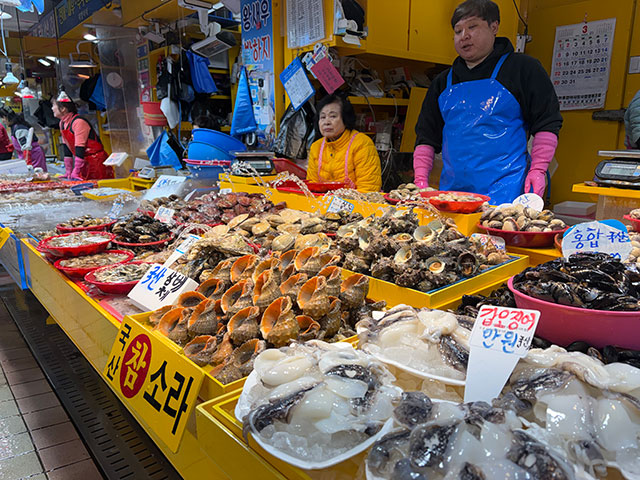
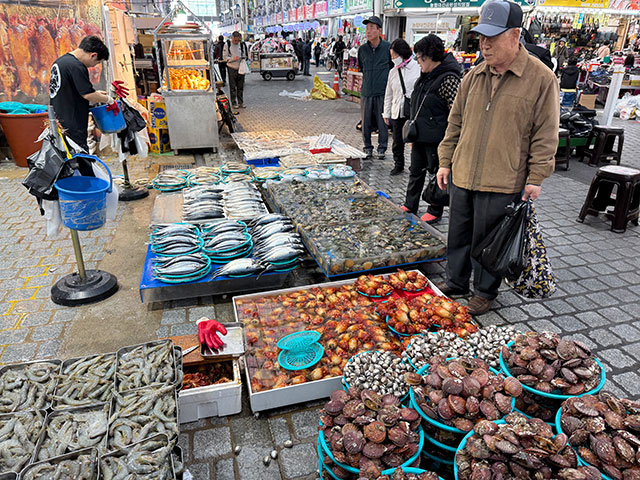
In South Korea there are markets all over the country selling seafood, fruit, vegetables, and prepared foods such as kimchi and namul. Think of it as a large-scale version of “Niji-no-Mart” or a more low-key version of Ueno’s “Ameyoko.” It seems the government is protecting markets like this in order to preserve the diverse food culture. It was a lively place filled with locals, and it felt like I was getting a glimpse into the daily lives of the people who live there—it was a truly enjoyable experience.
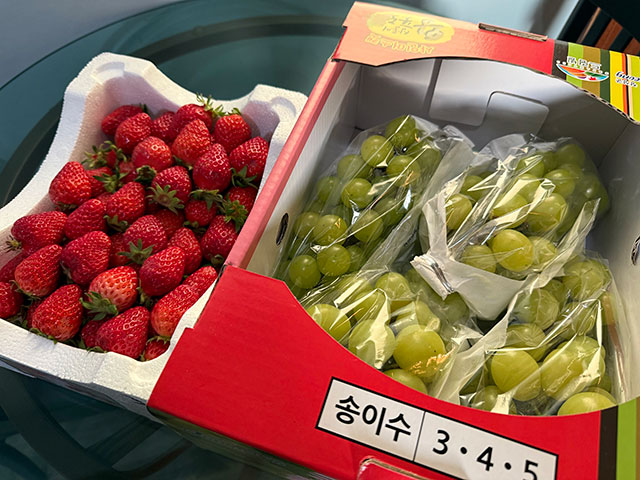
What surprised me in this market was how cheep the strawberries and Shine Muscat grapes were. They sell 1 kilogram of “Solhyang” strawberries for 600 yen, and 4 bunches of Shine Muscat for 700 yen. Of course, I bought them and tried them, and while both had a faint aroma and weren't particularly impressive, the taste was acceptable given the low price. It offered great value for the price. However, as some of you may already know, “Solhyang” is a variety created by crossing the Japanese varieties Akihime and Red Pearl. As for Shine Muscat, that goes without saying. We must protect Japan’s fruits!!
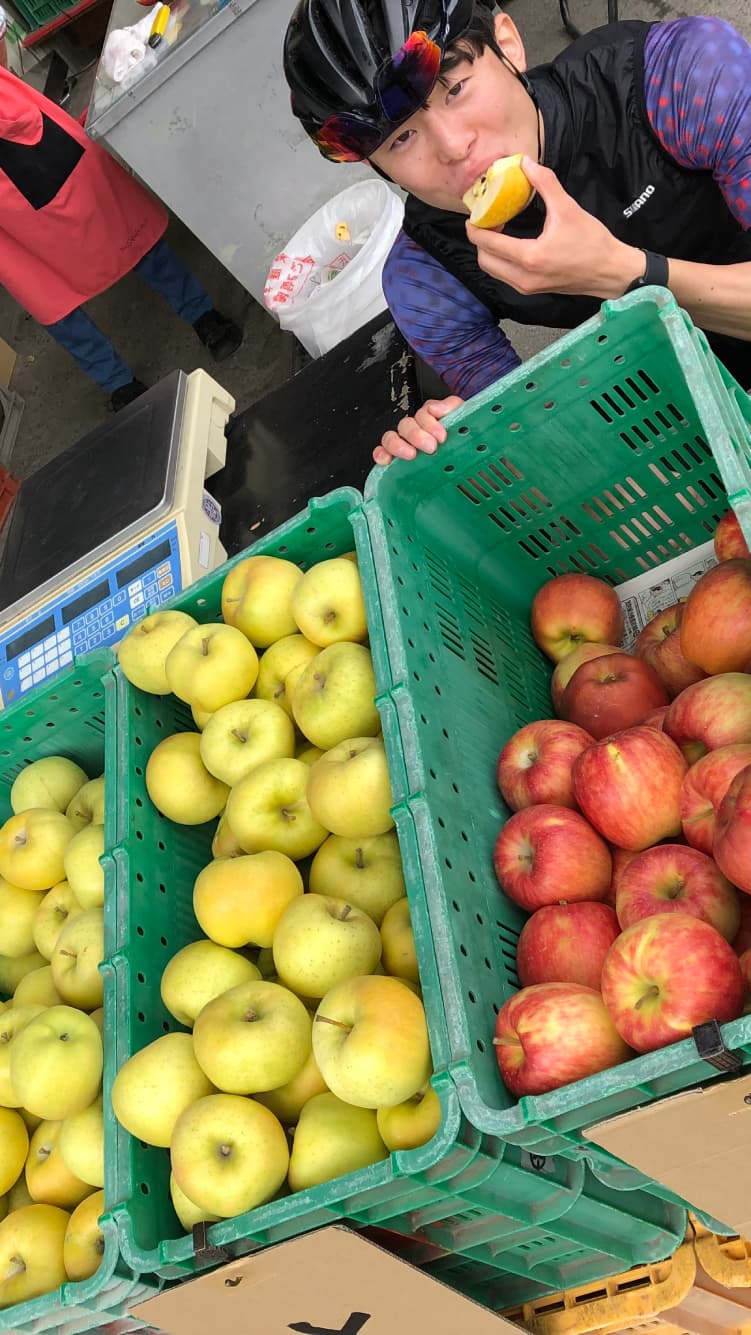
About 70% of apples in Korea are “Fuji” and “Tsugaru” that are varieties of Japanese origin. But recently they gradually switch to early-crop varieties of “Hongul” or “Pongfan” that are developed domestically. Since my stay was in late March, I could only see “Fuji” on store shelves.
As I stare intensely at apples, I noticed that none of the apples sold in any of the stores have stems/or have had them cut off. In South Korea, it is said that since the 1970s, it has become common practice to intentionally trim the stems to prevent them from piercing the cardboard during transport. Apparently, traces of that still remain today. Of course, cutting off the stems by hand is time-consuming, and that cost is passed on to the price. What’s more, moisture evaporates from the cut ends, which apparently leads to a decline in quality. It’s a lose-lose situation. As a result, there is a growing movement in markets and supermarkets to “look for apples with stems” as a way to improve quality.
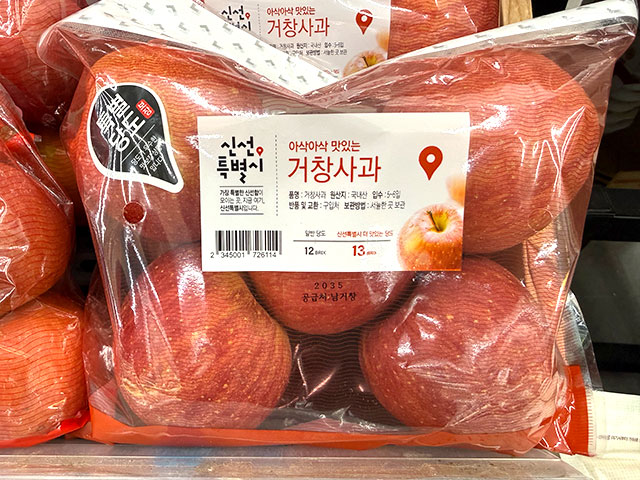
At one market in Jeonju, I bought a Fuji apple for 200yen and gave it a try. Overall, it was a bit bland, but it had a fresh, crisp texture and was delicious. However, 200 yen is too much for this quality. In South Korea, too, prices appear to have been on a steady upward trend in recent years due to the effects of climate change and a decline in supply caused by a decrease in the number of producers. It seems that every country faces similar challenges.
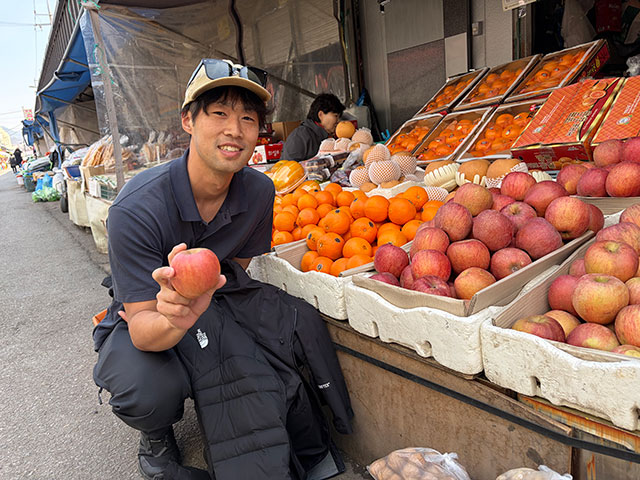
Born on August 1, 1997 in Yokohama, Kanagawa
While working as an elementary school teacher, he discovered a job with the Regional Revitalization Corps and delicious apples: two things that brought him to Hirosaki for an I-Turn move. He explores many facets of apples by tasting various varieties, engaging in production work as a side job and obtaining a certificate of Cider Ambassador.
He shares information about apples here at “Apple University” drawing on his boundless love and curiosity for apples. At present he is on a journey around the world as a career break and reports on the state of the global fruit industry.