Date Posted:November 16, 2026
I entered China from Inchoen, South Korea by a ferry boat. Arriving at Donggang, Liaoning Province, my journey began visiting the provinces of Northeastern China including Liaoning, Jiling, Heilongjiang. This region lies on the periphery of China, where nomadic peoples have successively established their own domains since ancient times, and where rulers have changed with each era. The State of Manchukuo was also located in this region, and on this trip, I visited major cities in the former Kanto Province and the former State of Manchukuo, such as Dandong, Dalian, Shenyang, Changchun, and Harbin.
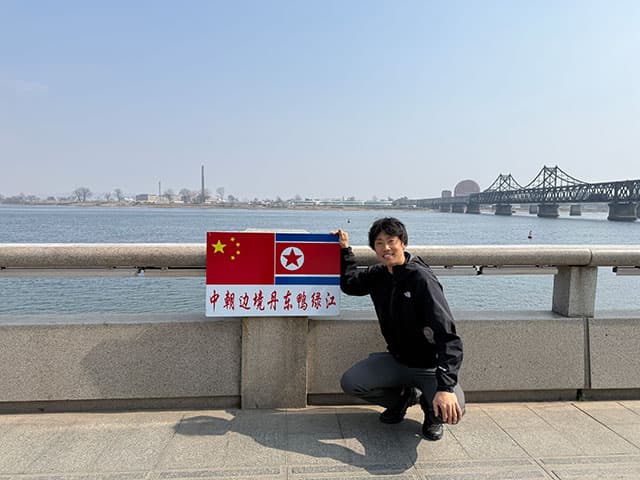
I also traveled to the Northern China region, including Beijing, Shanxi Province, and the Inner Mongolia Autonomous Region. I stayed in Beijing, Datong, and Hohhot, and traveled long distances by train to enter Mongolia.
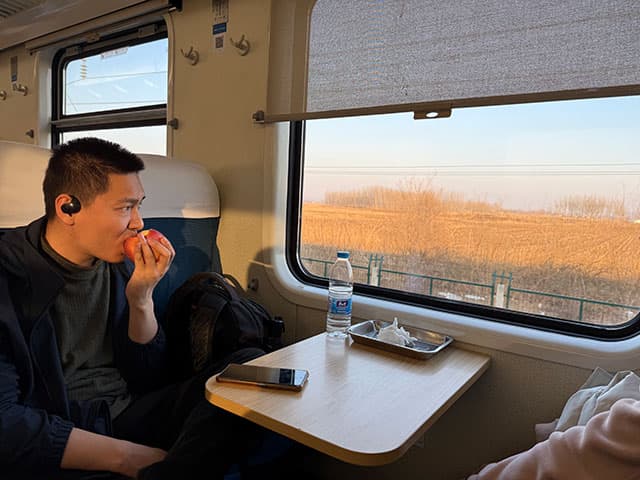
What I used most on the train was the cheapest seat called “hard seat” arranged to face other passengers. A young man sat diagonally across from me took out an apple and started eating it. The scene looked so cool to me and I asked him a permission to snap a photo. That became a conversation starter and followed by a series of questions. In China fruits seemed to be classified as snacks. He described that he was a little hungry and reached for some snacks. Good idea. I like the way they eat fruits on the train as a matter of course, the concept that fruits are snacks is great as well.
Now let's get to the main topic of this fruit travelogue.
Apples are called “pingguo” in Chinese. With annual production exceeds 51 million metric tons and the annual consumption exceeds 47 million metric tons, China can be considered the world’s leading apple producing nation.
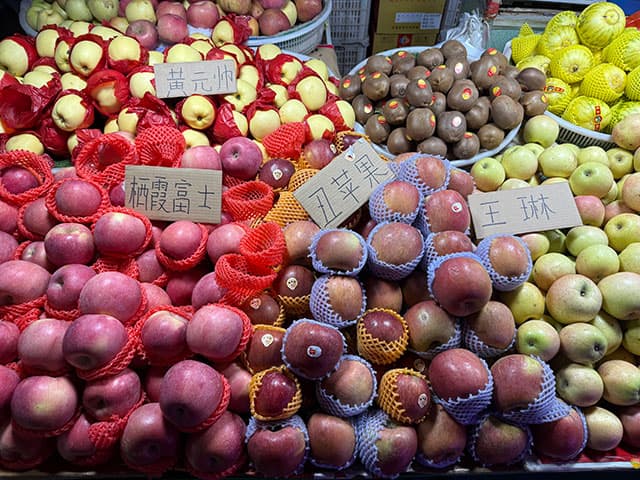
On the other hand, perhaps because they aren’t imported into Japan, many Japanese people are probably unaware of Chinese apples. I am, of course, one of them. So, since I was already in China, I decided to go undercover and investigate. To get started, I visited markets and super-markets all the time.
Go on to Part 2 --- Please wait
Born on August 1, 1997 in Yokohama, Kanagawa
While working as an elementary school teacher, he discovered a job with the Regional Revitalization Corps and delicious apples: two things that brought him to Hirosaki for an I-Turn move. He explores many facets of apples by tasting various varieties, engaging in production work as a side job and obtaining a certificate of Cider Ambassador.
He shares information about apples here at “Apple University” drawing on his boundless love and curiosity for apples. At present he is on a journey around the world as a career break and reports on the state of the global fruit industry.